An end to paperwork chaos: How AI automatically captures material certificates and makes them traceable right down to the component
Folders full of material certificates, manually typing in batch numbers, and still ending up with missing documentation — everyone in plant engineering knows the problem. With AI-powered document analysis, that’s a thing of the past.
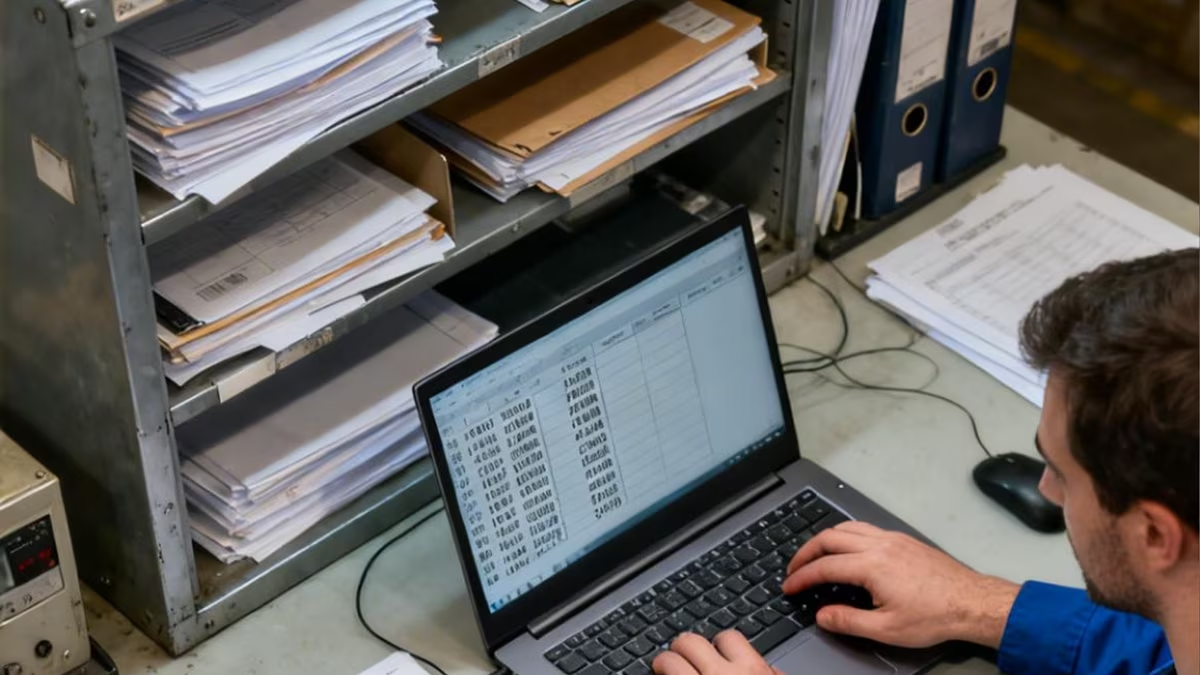
Anyone working in plant engineering knows the picture: Material certificates pile up in goods receiving. 3.1s, 3.2s, sometimes even a 2.2 mixed in. Every single one has to be checked, assigned, and filed away — usually on paper or, at best, as a PDF somewhere on the server. And when someone needs proof for a specific component three months later? That’s when the search begins.
The real problem is not the certificate itself — it’s the disconnect between the document and the component. In paper filing systems, there is no real link between the certificate, the purchase order item, and the pipe installed in line 42. That link only exists once someone creates it manually. And that’s exactly where errors happen.
What changes when AI reads the certificates
Imagine scanning a material certificate — or receiving it directly from the supplier as a PDF. Within seconds, the following happens:
- The document is automatically recognized as a certificate and classified according to EN 10204 (2.2, 3.1, or 3.2)
- Material grade, heat number, dimensions, and test values are extracted — even from scanned documents that are not machine-readable
- The data is automatically assigned to the correct purchase order item and the correct project
The result: The paper folder becomes obsolete. Not because certificates are no longer needed, but because they are digitally captured, structured, and linked.
Traceability down to the individual component
That is the real game changer. When material certificates are no longer loose documents but are directly linked to purchase orders, goods receipts, and pipe classes, a complete traceability chain is created:
Component → Heat → Certificate → Test values → Supplier
For every installed pipe, every flange, and every fitting, it can be verified at the push of a button: Which material was installed? Which heat did it come from? Which test values did the manufacturer document? And do these match the requirements of the pipe class?
During an audit or inspection, that is the difference between “Hold on, let me find the folder” and a single click.
Why this matters right now
PED 2014/68/EU and EN 10204 have required traceability for a long time. But in practice, implementation often fails because the effort required for proper documentation is simply too high. AI-supported analysis drastically reduces this effort — without compromising data sovereignty. All processing runs on-premise and GDPR-compliant; no data leaves the company.
pAIpe brings material certificates where they belong: away from paper and into the digital workflow — with complete traceability down to the individual component.