From fleet management to asset management: keeping operating hours, inspection intervals and costs under control
Cranes, trucks, machines, tools: Anyone managing their equipment using Excel, paper, and gut feeling loses track of operating hours, inspection intervals, and costs. How centralized fleet and asset management in paipe turns scattered lists into a single, audit-proof system.
Where is the excavator actually located – and when was it last inspected?
It’s Monday morning. The foreman needs the crawler excavator on the North site, the workshop is looking for the generator for the repair hall, and the safety officer is asking when the lifting gear was last inspected. Three questions, three phone calls, three answers somewhere between “should be…” and “I’ll check.”
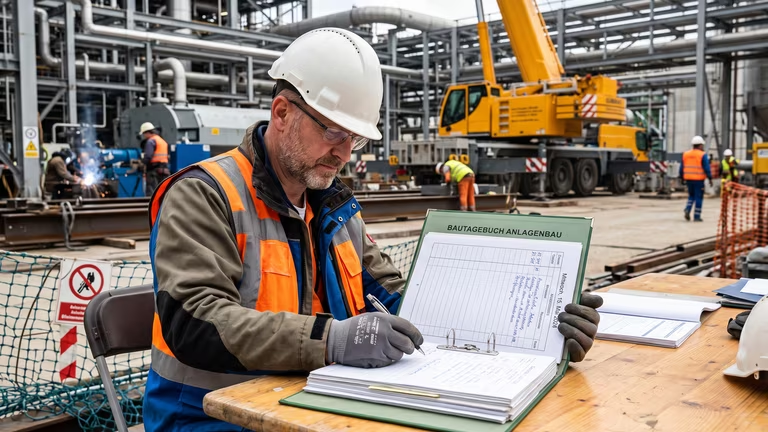
In many companies, knowledge about their own equipment is scattered: operating hours in a notebook in the cab, inspection dates in the head of an experienced colleague, repairs “when something breaks.” That works surprisingly well – until a machine is overdue for inspection, a crane fails unexpectedly, or proof is missing during an audit.
Fleet is only half the story
The vehicle fleet usually gets the most attention: trucks and cars are on the road, clearly regulated, with MOT, insurance, and fuel card. But that’s just the visible tip. Beneath it lies a much larger pool of equipment: cranes, excavators, generators, welding machines, lifting and rigging gear, ladders, power tools, measuring instruments.
Each of these assets has the same characteristics as a vehicle – operating hours, inspection intervals, costs, and a responsible person – but is often documented far less thoroughly. Asset management simply means applying the same discipline already used for the vehicle fleet to every piece of equipment. One system for everything that has value and needs maintenance.
Operating hours instead of gut feeling
Maintenance by calendar is convenient but rarely accurate. A crane running continuously needs servicing sooner than one that’s half-idle in the yard. That’s why good asset management plans based on actual usage – on operating hours, not gut feeling.
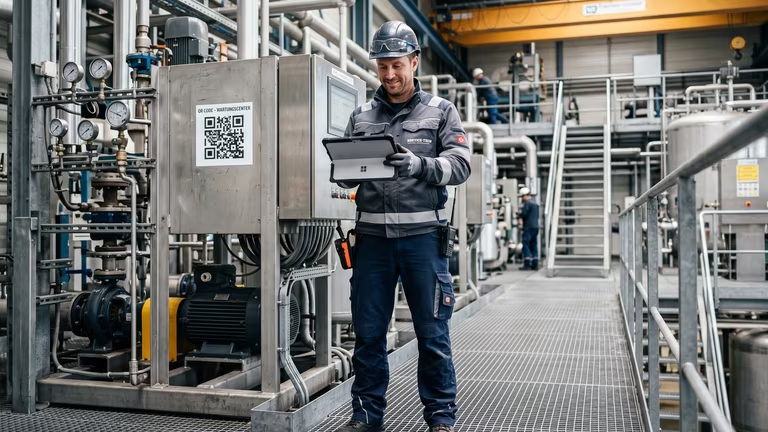
Record operating hours on the go.The operator enters the meter reading directly on the machine – no note in the cab, no retyping in the office, no number mix-ups two weeks later.
Maintenance that speaks up early.When a machine approaches its service threshold, the system triggersbeforethe warning light in the cab comes on. “Broken, so workshop” becomes “due, so scheduled.”
That’s exactly the path Gräser Eschbach has taken:how the company manages over 100 cranes and 50 trucks in paipe– from recording operating hours to on-time maintenance, without having to chase down numbers on demand.
Inspection intervals that notify themselves
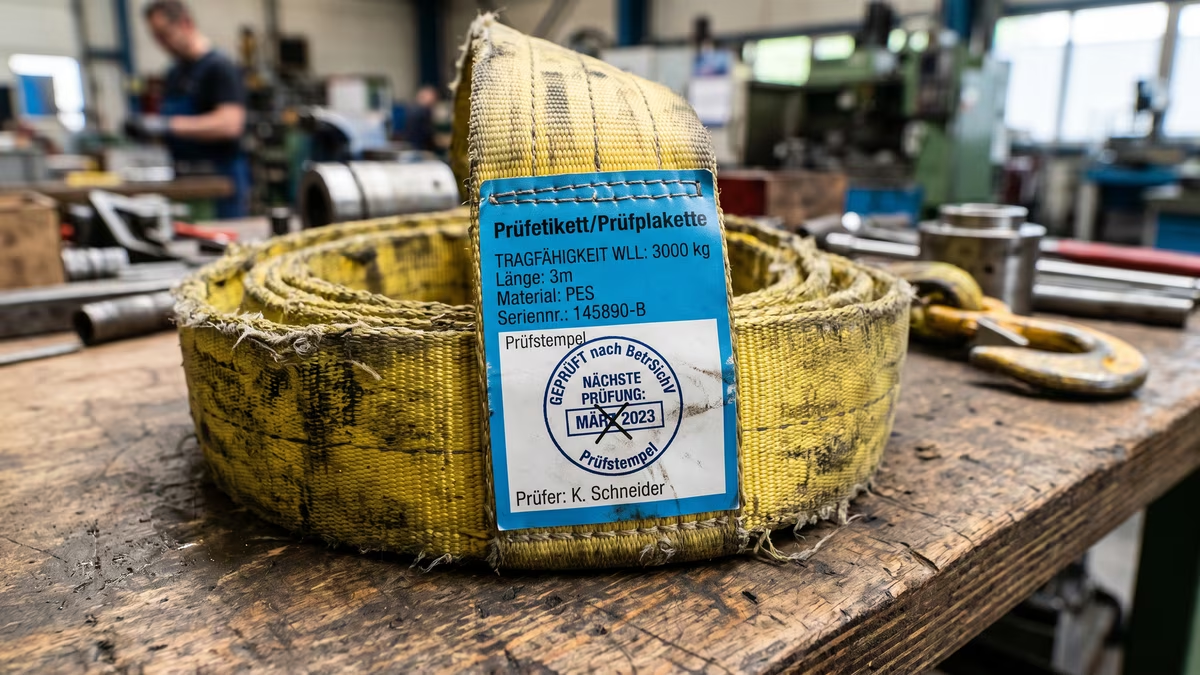
Few areas are as unpopular yet as important as inspection intervals. The annual crane inspection by a qualified expert, DGUV Regulation 3 for portable electrical equipment, the inspection of lifting gear and ladders, the MOT for vehicles – every missed deadline means liability risk, potential downtime, and in the worst case, an audit finding.
In asset management, every inspection interval is linked to the respective machine – with advance reminders. Instead of realizing afterward that an inspection “expired three months ago,” the responsible person sees in time what’s due and schedules it. The inspection reports are stored directly with the asset – audit-proof and retrievable within seconds during an audit.
Who has the machine? Owner, operator, and location
An asset without responsibility is an asset nobody maintains. That’s why every piece of equipment must answer: Who is responsible, who is using it right now, and where is it located?
Owner and operator assignment.From the truck with assigned driver and documented license check to the crane with designated operator – responsibility is clearly recorded.
Location and project reference.Which machine is on which site, and which project is it assigned to? If something happens, it’s immediately clear where the asset was and who was handling it.
Costs that finally become visible
As long as purchase, maintenance, repair, and downtime are stored in separate folders, the most important question remains unanswered: What does this machine actually cost us? Only when all costs converge at the asset level does the difference between a reliable workhorse and a money pit become visible.
With lifetime costs per asset, “the repair is still worth it” becomes a sound decision. And because equipment can be assigned to projects, their costs flow exactly where they arise – into project costing instead of an anonymous general pool.
One system instead of ten lists
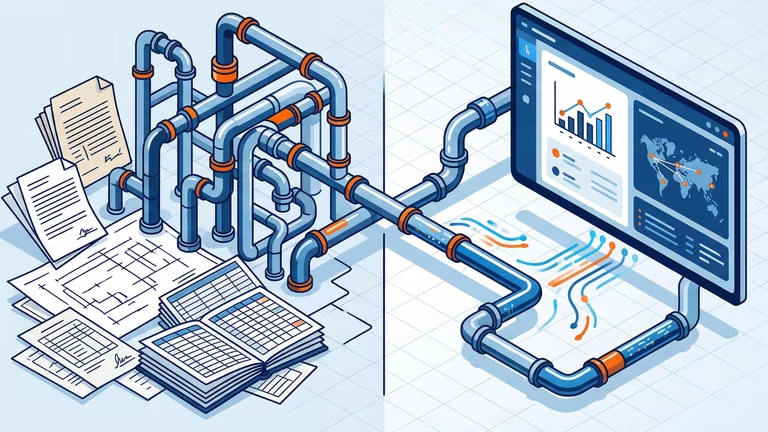
The real leverage doesn’t lie in a single function but in bringing everything together in one place: fleet and equipment, operating hours and inspection intervals, assignments and costs, plus the related documents – operating manuals, inspection reports, insurance certificates. Captured in the field, analyzed in the office.
The same data foundation then carries further: into planned maintenance –from QR scan on the machine to invoice in one flow– into project management and audit-proof documentation. No media breaks, no ten Excel islands that never quite fit together.
From reacting to planning
Fleet and asset management isn’t a luxury for large companies. It’s the difference between reacting and planning – between a warning light that comes on too late and a notification that arrives in time. Between audit stress and audit confidence.
Those who know their machines, plan their maintenance, keep up with inspections, and know their costs lose less time, less money, and fewer nerves. That’s exactly what fleet and asset management in paipe is built for: so that every crane, every truck, and every machine becomes – and stays – visible.